
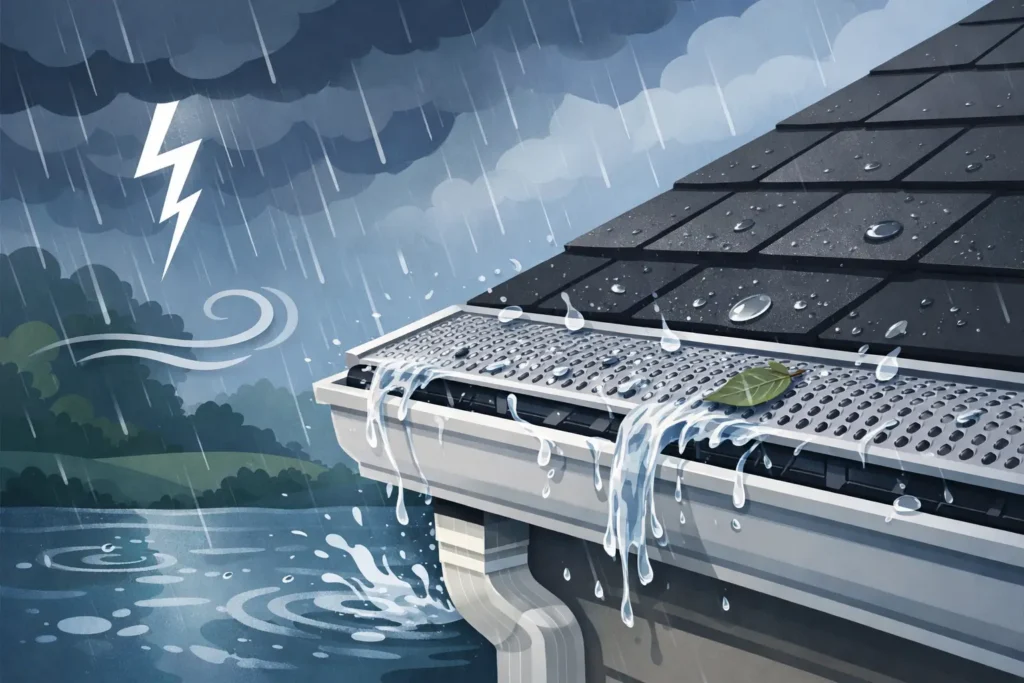
A hard spring downpour can send gallons of water racing off your roof in minutes. Add wind-driven leaves, maple seeds, or small twigs, and an ordinary gutter system can quickly become a weak point. So, can gutter guards handle storms? A quality guard system can make a major difference, but it is not a magic cover that makes every gutter problem disappear.
The right gutter guards help keep debris out while allowing rainwater into the gutter. That means less chance of a clog forming during the exact weather event when your home needs drainage most. Still, performance depends on the guard design, the condition and size of the gutters, proper installation, roof conditions, and the type of storm rolling through Eastern Indiana or Western Ohio.
What Gutter Guards Do During a Storm
Gutter guards are designed to separate water from debris. Rain should flow through or around the guard and into the gutter, while leaves, needles, shingle grit, and twigs stay on top and blow away or dry out between storms.
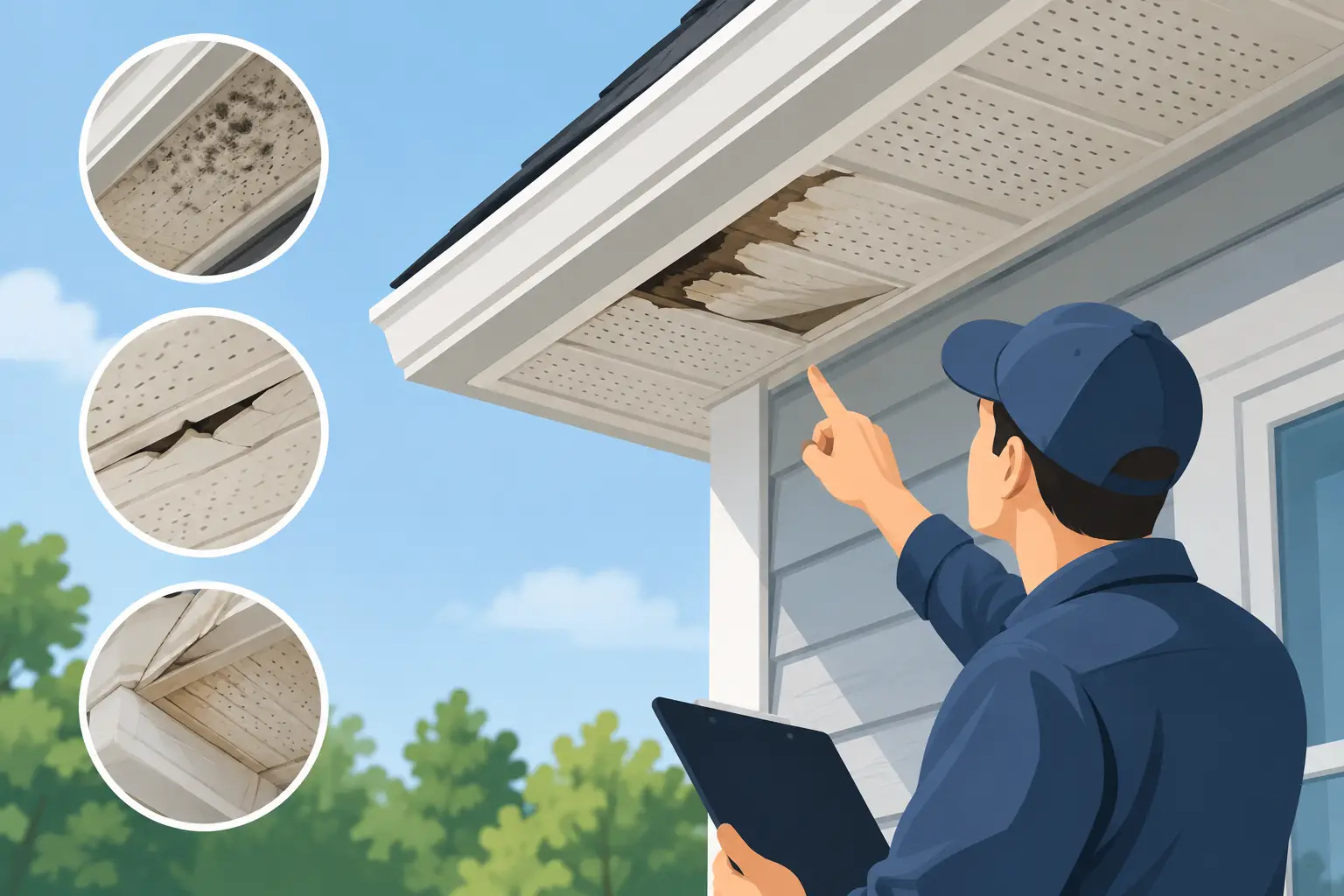
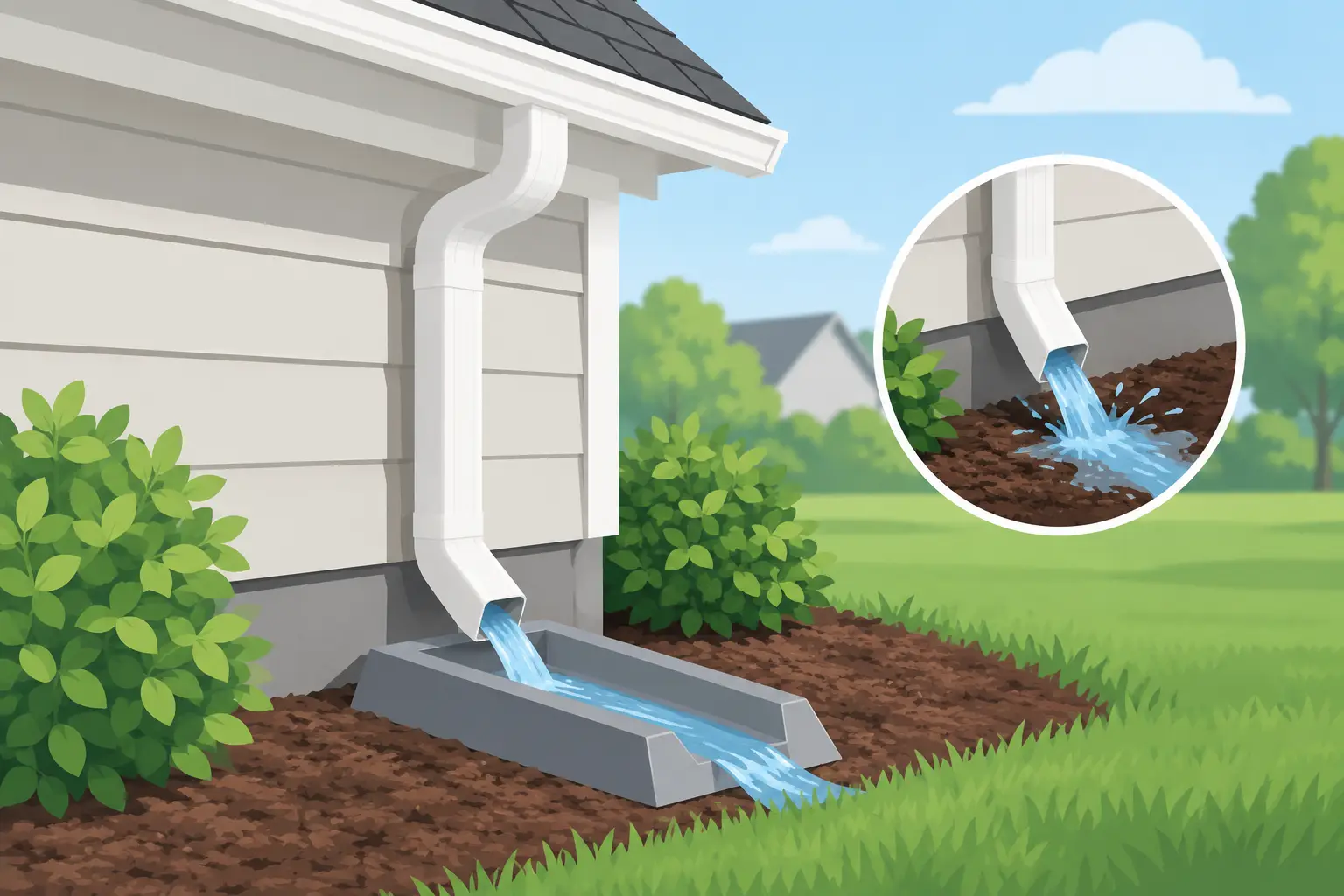
That matters because an open gutter can clog at the downspout outlet, often where a homeowner cannot see the blockage. Once water has nowhere to go, it can spill over the front or back of the gutter. Repeated overflow may soak fascia boards, stain siding, wash out mulch, damage landscaping, and leave excess water near the foundation.
During a typical heavy rain, a properly selected and professionally installed guard can reduce the amount of debris entering the system and help the gutter keep draining. It also reduces the need for frequent cleaning, especially on homes surrounded by mature trees. The goal is not simply cleaner gutters. The goal is to keep roof runoff moving away from the house.
Can Gutter Guards Handle Storms With Heavy Rain?
Yes, well-designed gutter guards can handle heavy rain, but capacity matters. A gutter guard cannot compensate for undersized gutters, too few downspouts, poor gutter pitch, or a downspout that is already blocked underground.
Every roof sheds water differently. A large, steep roof can release a surprising volume of runoff into one section of gutter. If that section does not have enough drainage capacity, water may overshoot the guard or spill over the gutter during a severe downpour. This does not always mean the guard failed. It can mean the entire system needs to be evaluated as one drainage system rather than as separate parts.
This is why guard installation should start with an inspection. A contractor should look at the roofline, existing gutter size, fastening method, slope, downspout locations, and the trees around the property. A guard that works well on a low-slope ranch home may not be the right answer for a two-story home with long roof valleys that concentrate water in one spot.
Roof Valleys Need Extra Attention
Roof valleys are common trouble areas. They collect water from two roof planes and direct it into a small section of gutter at high speed. During a storm, that concentrated flow can carry leaves, acorns, and roof grit with it.
A capable guard can help prevent a debris clog below the valley, but the gutter may need additional support, a larger outlet, another downspout, or a splash-control solution. Ignoring a high-flow valley and installing guards alone can leave the underlying overflow issue unresolved.
Wind, Leaves, and Storm Debris
Heavy rain is only one part of the challenge. Strong winds can drop a fresh load of debris into an open gutter just before or during a storm. Small leaves, seed pods, pine needles, and roof granules can work their way toward the downspout and create dense, stubborn clogs.
Guards reduce this risk by limiting what enters the gutter in the first place. However, no guard remains completely maintenance-free in every setting. Fine debris can collect on top of some styles, particularly beneath pine trees or near roofs with heavy shingle-grit loss. Wet leaves may also temporarily sit on a guard surface until wind and dry weather move them along.
That is a reasonable trade-off for many homeowners. Brushing or rinsing a guard surface occasionally is generally safer and easier than digging compacted debris out of an open gutter and downspout. But homeowners should be cautious about climbing ladders, especially after a storm. A professional inspection is the better choice when there are signs of overflow, loose gutters, or roof damage.
Not All Gutter Guards Perform the Same
The label “gutter guard” covers many different products, from inexpensive screens that sit loosely in a gutter to integrated systems that also strengthen the gutter run. Their storm performance can vary widely.
Basic screens can block larger leaves but may allow smaller debris through. They can also shift if they are not fastened correctly. Brush-style inserts tend to catch debris within the gutter, which can create a cleaning job instead of preventing one. Foam inserts can slow debris but may hold moisture and break down over time.
More durable, professionally installed systems are typically built to stay secure and support consistent water flow. Seamless Gutter Solutions installs Double Pro by Alurex, a continuous-hanger leaf protection system designed to strengthen the gutter while helping keep debris out. That combination is especially valuable in areas that see seasonal leaf drop, spring storms, and winter weather.
The best choice still depends on the home. A trustworthy recommendation should explain what product is being installed, what work the existing gutters need first, and what maintenance to expect. Homeowners should never have to guess whether a quote includes repair work, downspout changes, or removal of old guards.
Installation Determines Whether Guards Help or Hurt
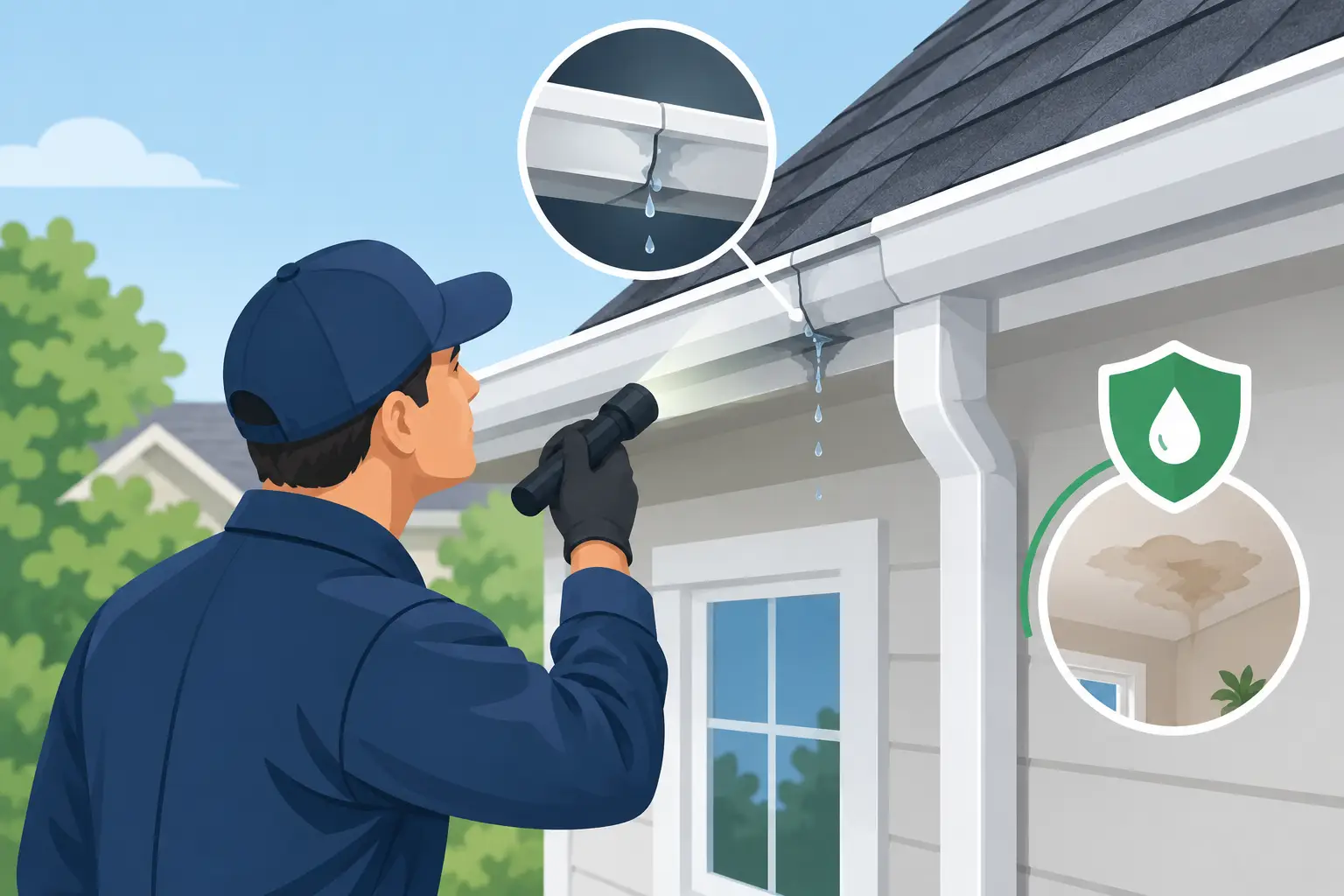
Even a premium guard will not perform as intended if it is installed over damaged, sagging, or improperly pitched gutters. Water has to flow toward the downspouts. If gutters pull away from the fascia, hold standing water, or have seams opening up, a guard does not solve those problems.
Proper installation begins with cleaning and inspecting the existing system. The installer should address loose hangers, leaks, poor pitch, and blocked downspouts before adding protection. On some homes, replacement with properly sized seamless gutters is the smarter long-term investment.
It is also critical not to interfere with the roof edge or create a path for water to run behind the gutter. Guards should fit the roof and gutter configuration securely without relying on shortcuts. When installed correctly, a quality system can protect the gutter from debris while maintaining the drainage path your home relies on.
What Gutter Guards Cannot Prevent
Gutter guards are valuable protection, but they have limits. They cannot stop water from overflowing when a downspout is crushed, disconnected, or clogged farther down the line. They cannot correct poor grading that directs water back toward the foundation. They also cannot protect a roof from storm damage or prevent a branch from damaging the gutter itself.
After a severe storm, watch for water pouring over the gutter edge, water marks on siding, sagging sections, loose brackets, downspouts that do not discharge, or puddling near the foundation. These signs call for an inspection, whether you have guards or open gutters.
Winter brings another limitation. Guards can reduce leaf buildup before freezing weather arrives, but they do not eliminate ice dams or solve roof insulation and ventilation issues. If ice repeatedly forms at the roof edge, the cause may be heat loss from the attic rather than the gutter system.
A Better Way to Prepare for the Next Storm
The practical question is not whether gutter guards can survive every possible storm. It is whether your current gutter system is prepared to move water safely during the storms your home actually experiences.
If your gutters overflow whenever rain comes down hard, need cleaning several times each year, or have sections pulling away from the house, start with a complete assessment. Look for a clear, itemized quote that identifies the condition of the gutters, needed repairs or replacement, the guard product being proposed, and any downspout improvements. Clear pricing and no hidden fees make it easier to choose the right level of protection without pressure.
A well-designed gutter and guard system gives rainwater a dependable path away from your roofline, siding, and foundation. Before the next storm puts that system to the test, a free inspection can give you a clear picture of what your home needs and what can wait.