
A drip at a gutter seam can look minor from the ground, but the water rarely stays minor. It can run down siding, wash out mulch, soak the soil beside the foundation, or leave a damp streak on a soffit. Knowing what causes gutter joint leaks helps you address the source before a small repair turns into a larger exterior water problem.
Gutter joints are the places where two gutter sections, corners, end caps, outlets, or accessories connect. These connection points rely on proper overlap, fasteners, and sealant to remain watertight. When one part fails, rainwater follows the easiest path out – often directly onto the side of your home.
What Causes Gutter Joint Leaks?
A leaking joint is not always caused by one bad bead of caulk. Age, movement, drainage issues, and installation details can all play a role. In Eastern Indiana and Western Ohio, repeated freezing, thawing, heavy spring rain, and falling leaves can put extra stress on gutters throughout the year.
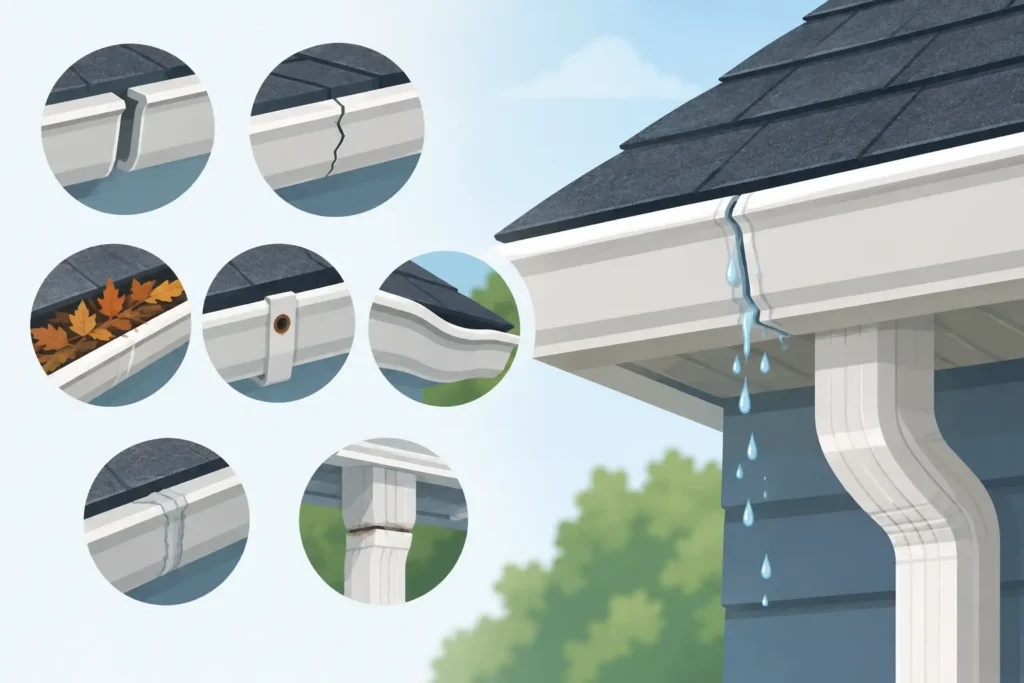
1. Failed or aging gutter sealant
Most gutter joints are sealed with a flexible gutter sealant designed for exterior exposure. Over time, sunlight, temperature swings, standing water, and normal expansion can dry it out or cause it to separate from the metal. Once a small gap forms, water can work behind the sealant and gradually enlarge the opening.
You may notice a dark line beneath a seam, drips from the bottom edge of a corner, or staining on the fascia behind the gutter. Fresh sealant may solve the problem when the gutter itself is still solid and correctly positioned. However, simply applying new sealant over loose, cracked, or dirty material often creates a short-lived fix. The old failed sealant needs to be removed, and the joint must be cleaned and dried before it is resealed.
2. Gutter sections shifting with seasonal movement
Metal gutters expand in heat and contract in cold weather. That movement is normal, but joints become vulnerable when a system does not have enough support or when sections were installed under tension. A seam that looks fine in warm weather may open slightly during a winter freeze.
This is especially common around corners and long gutter runs. If the joint continues to pull apart, sealing alone may not be enough. The gutter may need to be realigned, resecured, or supported with additional hangers before a lasting repair can be made.
3. Loose hangers and fasteners
Gutters must stay firmly attached to the fascia board so they can carry the weight of rainwater, leaves, and occasional ice. When hangers loosen, the gutter can sag or pull away from the roofline. That change in position places stress on nearby joints and can break the seal.
Loose fasteners are also a warning sign that the wood behind the gutter may be soft or damaged. A repair should address the attachment point, not just the leak below it. Securing a gutter to deteriorated fascia without correcting the underlying issue can lead to another failure soon after.
4. Clogs that hold water at the seam
Leaves, shingle grit, twigs, and roof debris can slow drainage and cause water to sit inside the gutter. Standing water puts more pressure on every joint, particularly near corners and downspout outlets. During freezing weather, trapped water expands into ice and can force seams apart.
Regular gutter cleaning is one of the simplest ways to reduce this risk. For homes surrounded by mature trees, cleaning may be needed more than once a year. A quality leaf protection system can also reduce how much debris enters the gutter, but it should be installed so rainwater can still flow freely into the system.
5. Improper gutter slope
Gutters need a slight, intentional slope toward the downspout. If a section is too level, slopes the wrong direction, or sags in the middle, water will collect instead of draining away. The nearest joint often becomes the first place that standing water finds an escape route.
This cause can be easy to miss because the gutter may look straight from the yard. During a heavy rain, though, you may see water lingering in one area or spilling from a seam well before the downspout. Correcting the pitch and hanger placement is usually more effective than repeatedly resealing the same joint.
6. Corrosion or physical damage around the connection
Older steel gutters can rust from the inside out, particularly where debris and moisture collect near seams. Aluminum gutters do not rust in the same way, but they can corrode, dent, bend, or develop small cracks. A damaged edge may no longer give sealant a stable surface to bond to.
Ladder impacts, fallen branches, and ice sliding from a roof can also bend a gutter corner or pull a joint out of alignment. If the metal is thin, cracked, or badly corroded, a patch may only delay replacement. The right option depends on how much sound material remains and whether other areas of the gutter are beginning to fail.
7. Poor installation or too many sectional connections
Sectional gutters use joints at every connected piece, creating more potential leak points over time. A joint can fail early if it was not properly overlapped, fastened, sealed, or supported during installation. Even a well-installed sectional system has more seams to maintain than a continuous gutter run.
Seamless gutters reduce the number of joints along the length of a roofline because each run is formed to fit the home. They still require connections at corners, end caps, and downspout outlets, but eliminating unnecessary seams can reduce long-term leak opportunities. For a home with repeated leaks across multiple joints, upgrading to seamless gutters may be a more practical investment than making frequent isolated repairs.
How to Tell Whether a Joint Needs Repair or Replacement
The best answer depends on the condition of the entire gutter system, not only the spot where water is dripping. A single leak at an otherwise solid joint may be a straightforward repair. If the gutter is securely attached, correctly pitched, free of corrosion, and draining well, cleaning and resealing the connection can often restore performance.
Replacement becomes more reasonable when you see several leaking seams, persistent sagging, widespread corrosion, loose gutters, damaged fascia, or overflowing caused by an undersized system. A repair may cost less upfront, but repeated sealant work on a failing sectional gutter can become frustrating and expensive over time.
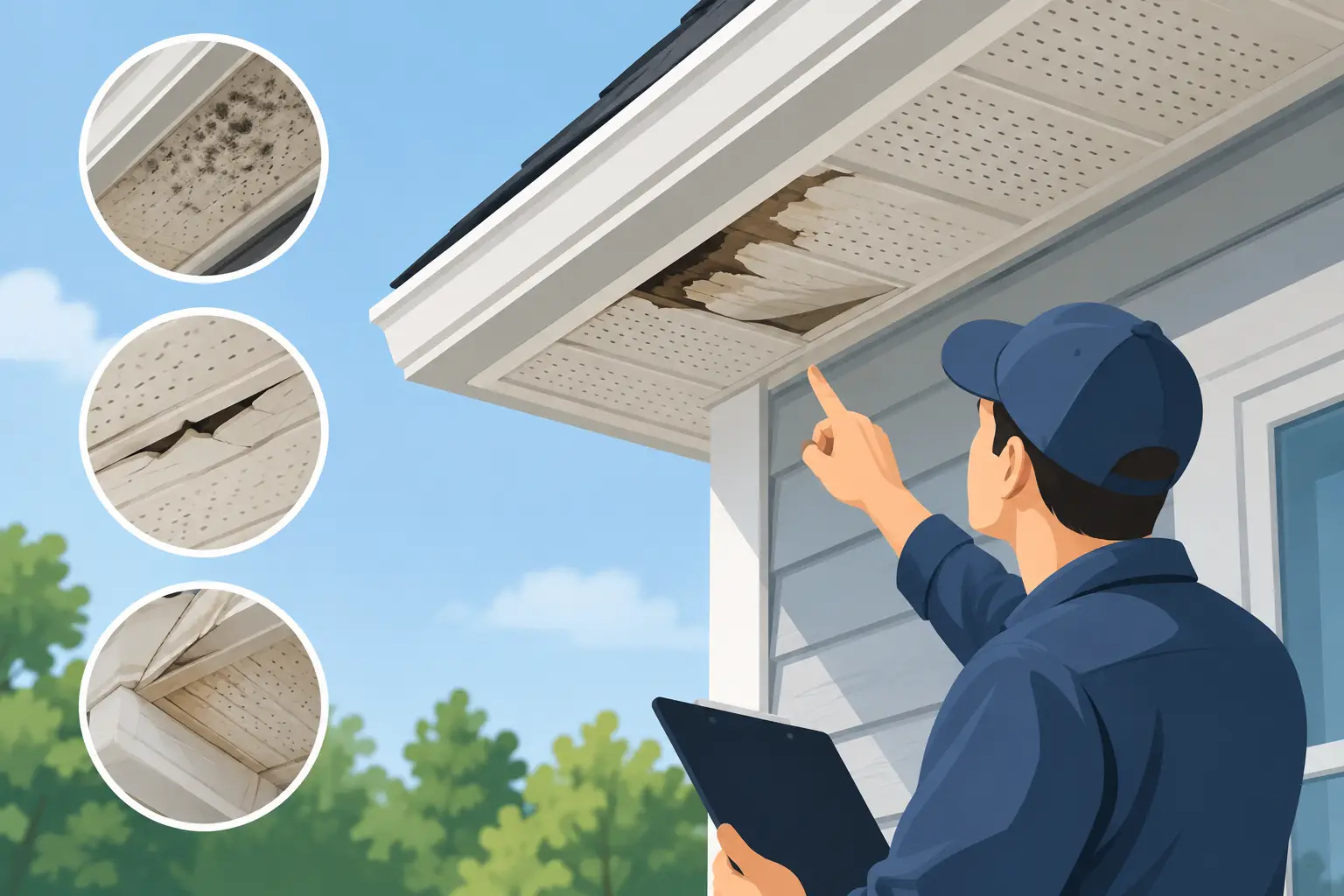
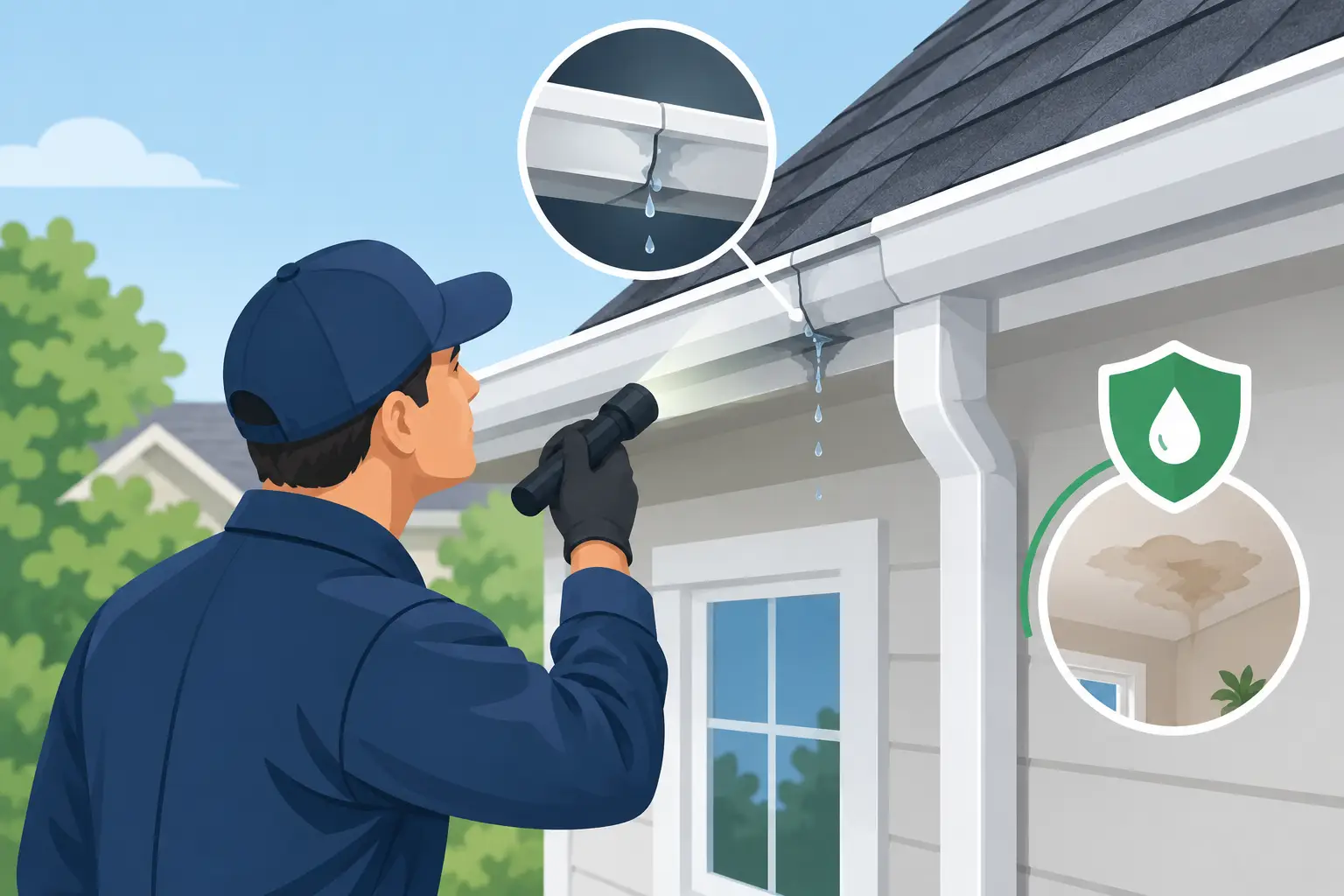
During an inspection, look for more than active dripping. Water stains on siding, peeling paint, soil erosion beneath the roof edge, mildew near the foundation, and rotted trim can all point to a gutter problem. It is also helpful to check the system during or shortly after rain, when drainage patterns are easiest to see safely from the ground.
Protect the Area Below the Leak
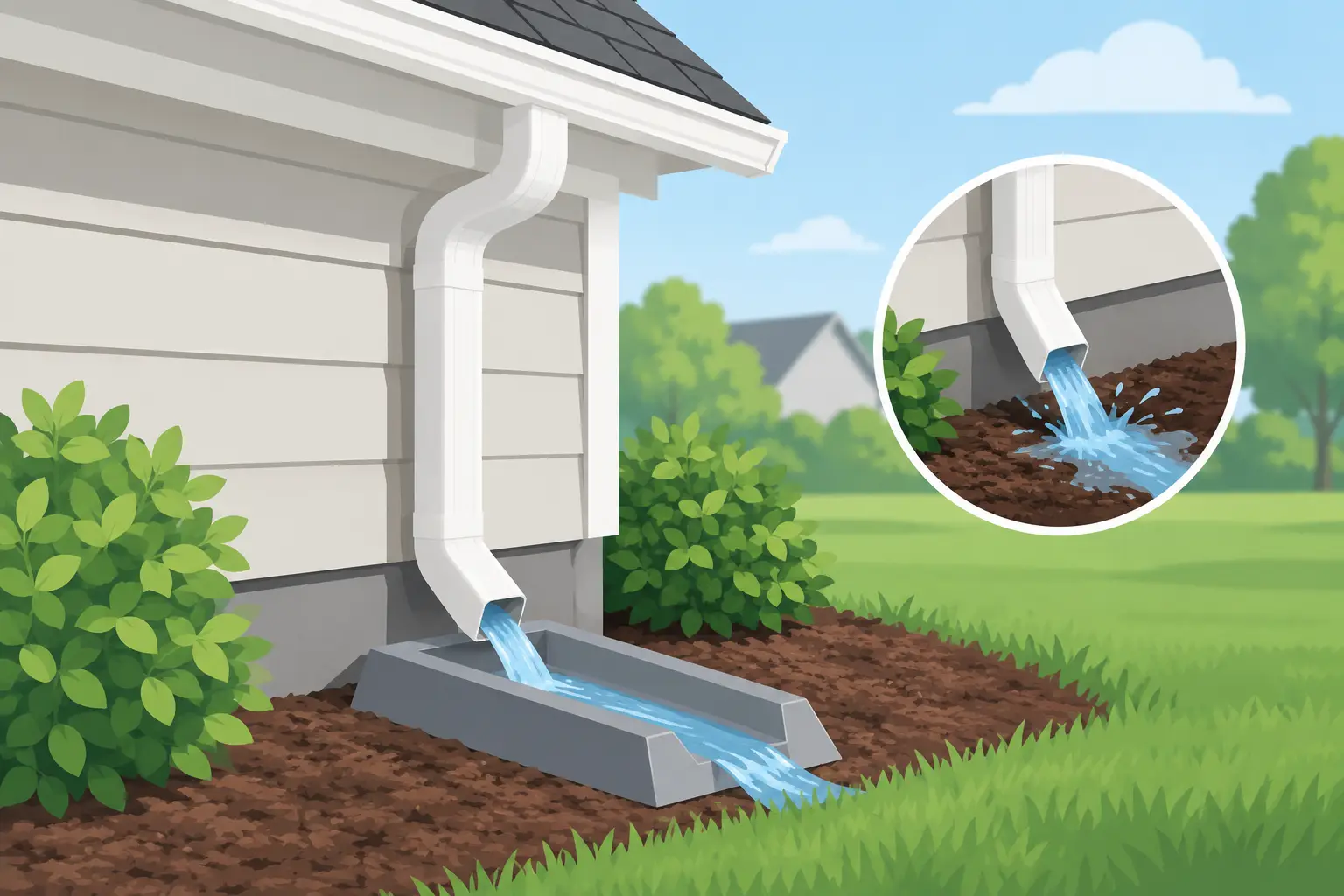
Avoid placing ladders against a gutter that is already loose or sagging. If water is pouring over a joint during a storm, make a note of the location and inspect it after conditions are dry. In the meantime, keep the area below clear of items that can be damaged by runoff and watch for water collecting near the foundation.
A professional inspection can identify whether the issue is failed sealant, poor slope, weakened fasteners, or a larger system problem. Seamless Gutter Solutions LLC provides clear, itemized estimates so homeowners can understand what the repair involves and decide whether repair or replacement makes better sense – without hidden fees.
A gutter joint leak is easiest to handle while it is still just a leak. Addressing it before the next heavy rain can help keep water where it belongs: moving through the gutter, into the downspout, and away from your home.