
A hard rain should leave your roof, not leave a problem behind. When water spills over gutters, pours beside the foundation, or cuts channels through mulch, it can affect far more than curb appeal. This roof runoff management guide explains how to move water safely away from your home and recognize when a drainage issue needs professional attention.
For homeowners across Eastern Indiana and Western Ohio, runoff planning matters because storms, wet springs, falling leaves, and freeze-thaw cycles can expose weak points quickly. The goal is straightforward: catch roof water, carry it through a properly sized gutter system, and discharge it where it will not threaten the house, driveway, landscaping, or neighboring property.
Start With the Path Water Takes
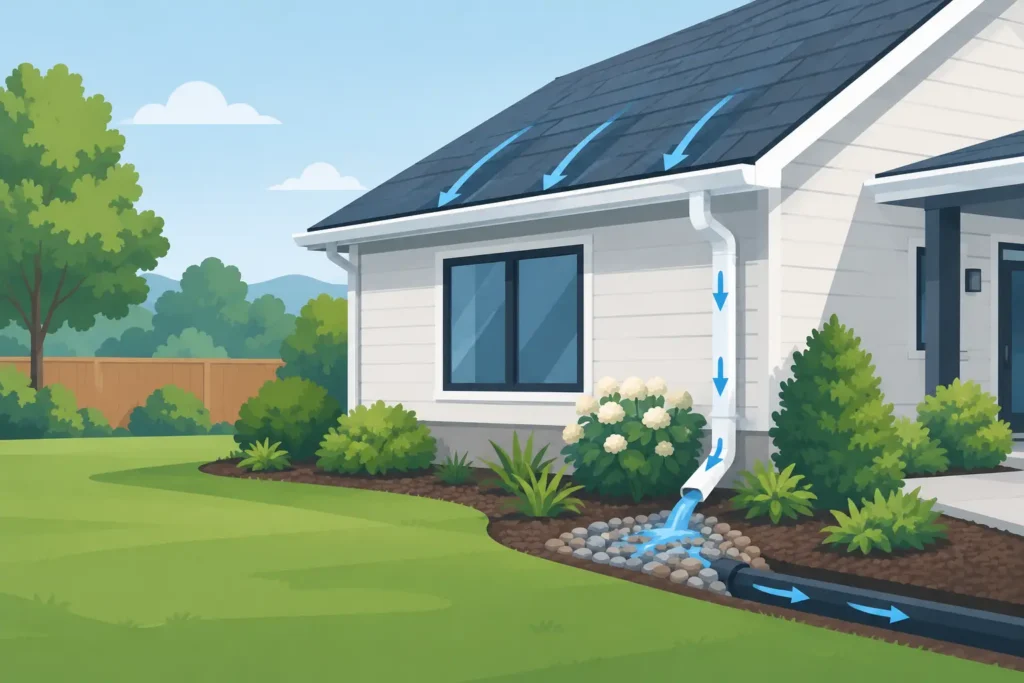
Roof runoff management is not just about having gutters. It is about following the complete path of water from the roof edge to its final discharge point. A system can look fine from the ground while failing at one critical transition, such as a clogged outlet, loose downspout, short extension, or low area near the foundation.
During a steady rain, look for the obvious warning signs. Water should enter the gutter rather than run behind it. It should travel to the downspout without overflowing at the corners or low spots. At the bottom, it should continue away from the home instead of pooling beside the wall.
If it is safe to inspect after the rain, look for wet soil against the foundation, mulch that has washed away, splash marks on siding, standing water near steps, and erosion beneath downspouts. Indoors, a musty basement, damp crawl space, peeling paint, or recurring cracks may point to water that has been collecting where it should not.
Match Gutters to Your Roof and Rainfall
A gutter system needs enough capacity for the roof area it serves. Larger roofs, long roof runs, steep pitches, and roof sections that concentrate water into one valley can send a surprising volume toward a small section of gutter. If the system is undersized or has too few downspouts, overflow can happen even when the gutters are clean.
Seamless gutters are often a practical choice because they reduce the number of joints along the run. Fewer seams can mean fewer places for leaks and separations to develop over time. That does not make them maintenance-free, but a correctly installed seamless system provides a cleaner, more dependable route for water.
Sizing is not a one-size-fits-all decision. A simple ranch home may need a different setup than a two-story home with intersecting rooflines and multiple valleys. Gutter placement, slope, outlet locations, and downspout size all need to work together. Adding a single downspout can solve an overflow issue in one case, while another home may need a wider gutter profile or revised routing.
Pay Attention to Roof Valleys
Valleys collect water from two roof planes and release it in a concentrated stream. During heavy rain, that flow can shoot past a standard gutter or overwhelm it at one point. A professional may recommend a splash control solution, a wider gutter, a larger outlet, or a layout adjustment based on how the roof drains.
This is one of the reasons a quick visual estimate from the driveway is not always enough. The roof design matters as much as the length of the gutter.
Keep Water Moving Through the System
Clogs turn a drainage system into a storage system. Leaves, maple seeds, pine needles, roof grit, and small debris can block water at the gutter, outlet, elbow, or underground connection. Once water backs up, it can overflow over the front edge, spill behind the gutter, or add unnecessary weight to the fascia board.
Scheduled cleaning is the basic answer for open gutters. Most homes benefit from cleaning at least twice a year, often in late spring and again after fall leaf drop. Homes surrounded by mature trees may need more frequent service. Waiting until water is visibly overflowing can allow debris to compact and make the job harder.
Gutter guards can reduce the amount of debris that enters the gutter, but the product and installation matter. A premium continuous-hanger guard such as Double Pro by Alurex supports the gutter while helping keep leaves and larger debris out. It can reduce routine cleaning needs, especially on tree-covered properties, but it does not eliminate the need for occasional inspection. Fine particles, roof debris, and buildup at downspout outlets can still affect performance.
The trade-off is simple: a quality guard is an upfront investment that may reduce maintenance demands and help preserve gutter stability. For a home with few trees, routine cleaning may be enough. For a homeowner tired of repeated clogs or ladder work, a professionally installed guard can be a sensible long-term upgrade.
Send Downspout Water Far Enough Away
A downspout that ends at the foundation is only doing part of its job. Water should be directed away from the home onto a surface that drains properly. The right distance depends on the property grade, soil type, hardscaping, and local conditions, but the principle stays the same: do not concentrate roof water next to the basement or crawl space wall.
Extensions are a common solution, whether they are above-ground sections, hinged extensions near walkways, or underground drainage lines. Above-ground extensions are easier to inspect and repair. Underground lines can be less visible and keep paths clear, but they need careful slope, a suitable outlet, and a way to address clogs. Sending water into an underground pipe without confirming where it exits can simply hide the problem.
Do not direct runoff toward a neighbor’s property, a sidewalk that can freeze, or a driveway where it may create standing water. If your yard is flat or repeatedly saturated, gutters alone may not solve the issue. Regrading, drainage swales, catch basins, or other site drainage work may be needed to handle water once it leaves the downspout.
Watch for Winter Problems
In this region, a downspout extension can become a slipping hazard when runoff freezes on a walk or drive. Check that outlets are not aimed across paths and that they remain open after snow, ice, and wind events. Ice buildup in gutters can also reveal a drainage or insulation concern, although not every icicle means the gutter system is at fault.
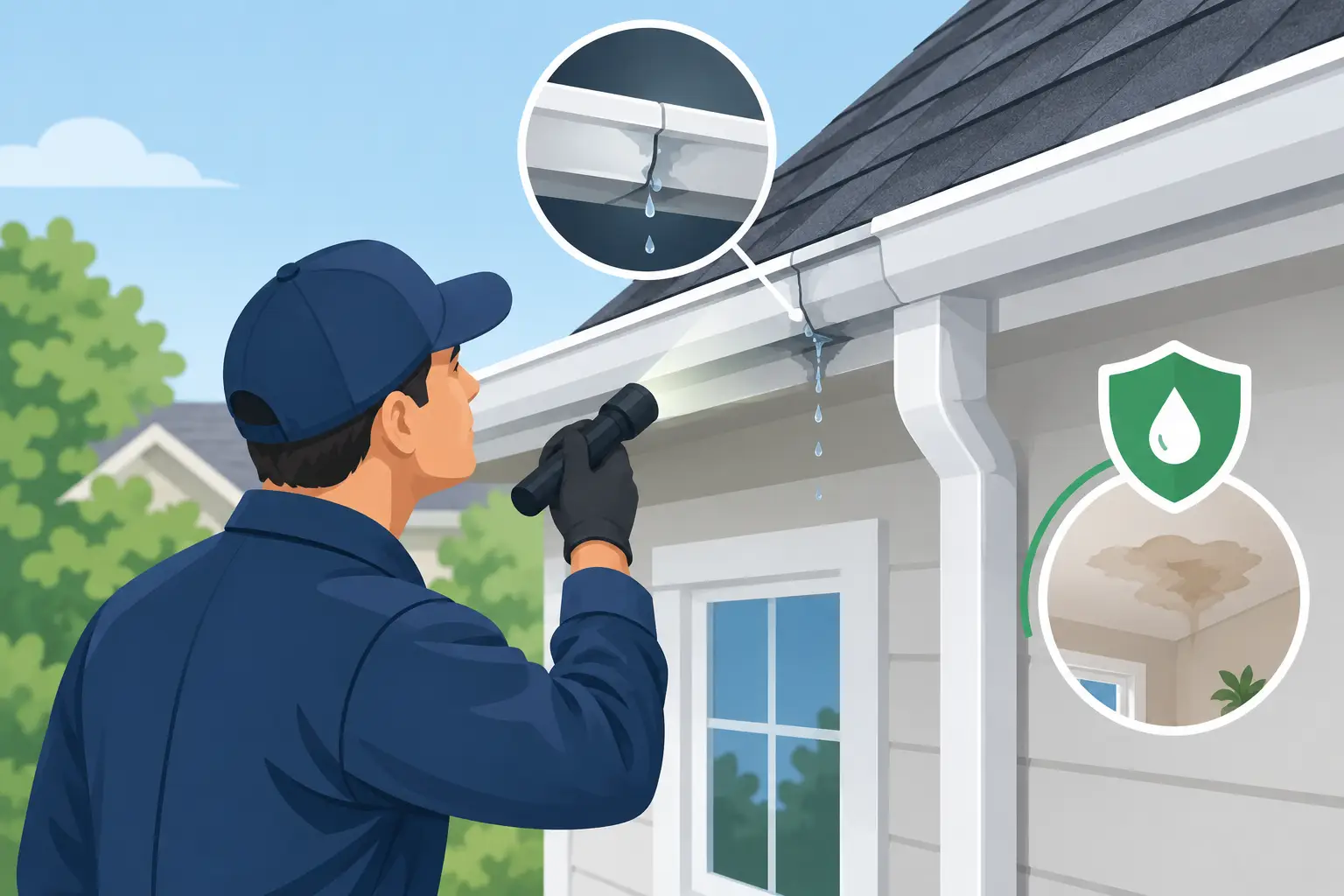
If gutters pull away, sag under ice, or leak at connections, schedule repairs before the next heavy storm. Small alignment issues can become fascia damage when water and ice add weight.
Protect the Areas Runoff Hits First
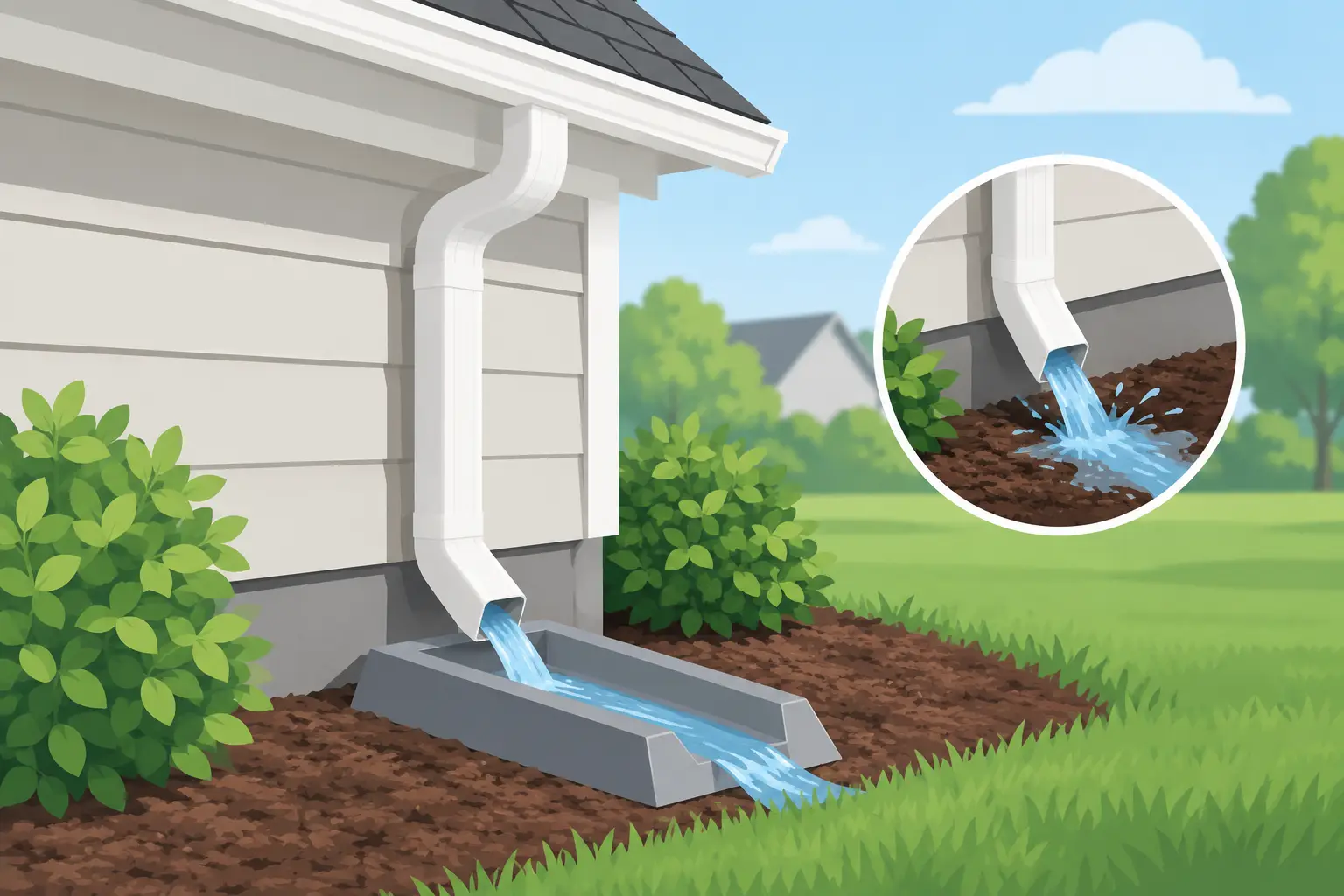
The ground below a downspout takes the force of every storm. Bare soil can erode quickly, leaving trenches, exposing roots, and carrying mulch across the yard. A properly placed splash block, stone bed, or extension can spread the water’s force, but these measures need to support the overall drainage direction rather than create a new low spot.
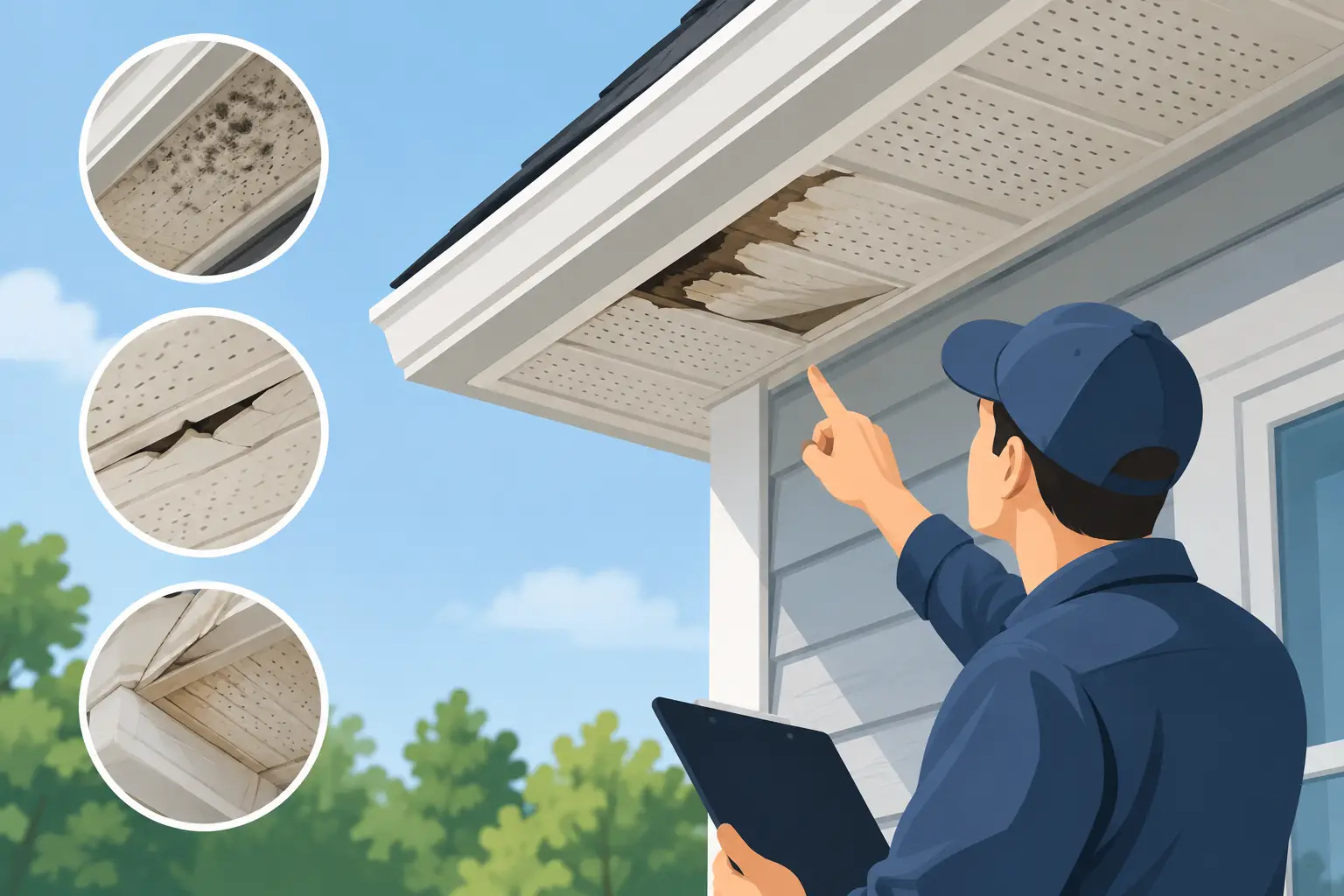
Siding and trim deserve attention too. Overflow that repeatedly runs down the exterior can stain surfaces, encourage rot around trim, and send water behind exterior finishes. If you see dark streaks, peeling paint, or softened wood near a gutter line, do not assume it is only cosmetic. The water source should be corrected before repairing the visible damage.
Foundation protection is the larger concern. Soil that stays saturated near the home can increase moisture pressure against below-grade walls. No gutter system can correct every foundation issue, but dependable roof drainage removes a major source of unnecessary water around the house.
A Practical Roof Runoff Management Guide for Inspections
You do not need to climb a ladder to keep an eye on runoff performance. Walk around the house during or shortly after rain and check whether water is overflowing, pooling, or washing out landscaping. From the ground, look for sagging gutter runs, separated downspouts, rust, visible gaps, and water stains beneath seams.
Then look up. Branches hanging over the roof, heavy leaf cover, and debris visible at the gutter edge all suggest maintenance is due. If a gutter seems to overflow only in certain storms, note the location and whether a valley or upper roof section drains there. That information helps identify whether the issue is a clog, improper slope, inadequate capacity, or concentrated roof flow.
Avoid treating recurring overflow as a normal part of a heavy rain. Some splashing can occur in extreme weather, but consistent overflow is a signal that the system needs evaluation. A clear, itemized assessment should explain what is wrong, what repair or upgrade is recommended, and why it fits your home rather than offering a vague fix.
Seamless Gutter Solutions LLC provides free inspections and detailed estimates so homeowners can make drainage decisions without guessing or worrying about hidden fees. Whether the answer is cleaning, repair, new seamless gutters, or leaf protection, the best next step is the one that gives water a reliable route away from the home.
The next time rain is in the forecast, take five minutes to watch where your roof water goes. That simple check can reveal a small problem while it is still much easier to fix.